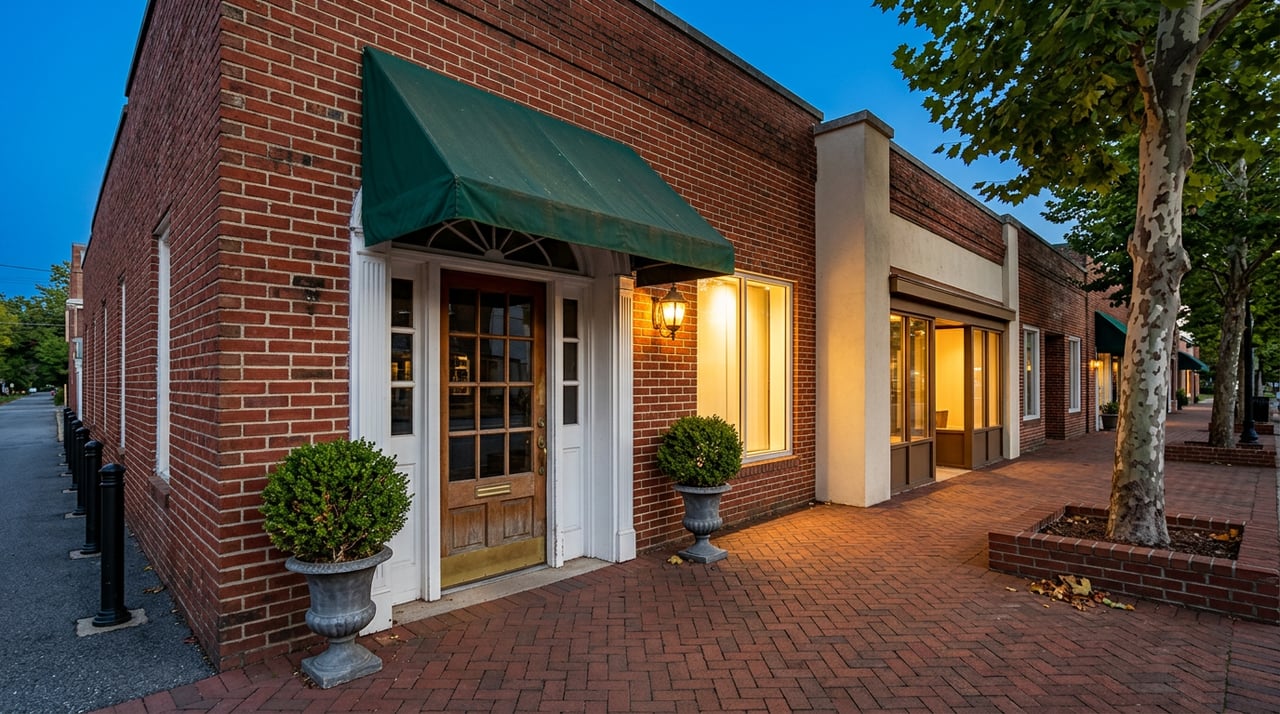
Walk Franklin Avenue on a Friday night this fall and you will pass a line for The James, catch the smell of pretzels and schnitzel drifting out of Prost Grill & Garten, and probably see someone waiting on a table at Meli-Estiatorio. Walk two blocks over to Seventh Street the same night and you will find something closer to quiet: a pharmacy closing up, a boutique with its lights still on, maybe a couple finishing dinner at a sidewalk table. Same village, same evening, two completely different registers.
That split is not an accident of geography. It is the shape Garden City's downtown has settled into after a year of real turnover, and it tells you something about how this village actually works that a generic "things to do" list would miss: Franklin Avenue and Seventh Street stopped trying to be the same street a long time ago, and 2026 made the difference sharper than it has been in years.
The Street That Keeps Turning Over
Franklin Avenue has spent the past year adding names, not just replacing them. The biggest change landed on June 17, when the Garden City Chamber of Commerce held a ribbon cutting for The James American Brasserie at 901 Franklin Avenue, in the space that spent six years as Primehouse Steak & Sushi. The ownership group behind the project also runs Arlo Kitchen & Bar in Northport, and they closed the old restaurant in January to rebuild the space before reopening it as an American brasserie with a full cocktail program. That is not a quick flip. It is a five-month renovation on one of the avenue's most recognizable addresses, which tells you the operators think Franklin Avenue is worth the investment.
A few doors down, Meli-Estiatorio opened at 815 Franklin Avenue in January, its owner marking the opening with a preview event that raised money for Life's WORC, a nonprofit headquartered nearby on Franklin Avenue that serves more than 2,000 people with developmental disabilities and their families. That detail matters beyond the charity angle: it is a reminder that Franklin Avenue's restaurant growth is tangled up with the rest of the corridor's institutions, not separate from them.
Neither opening happened in isolation. They joined a stretch that already includes:
- Waterzooi at 850 Franklin Avenue
- Tap Room at 919 Franklin Avenue
- Mesita at 825 Franklin Avenue, part of a small group that also runs a location in Rockville Centre
- Grimaldi's Pizzeria at 980 Franklin Avenue
- Smok Haus, the barbecue spot near 12th Street and Franklin
- Prost Grill & Garten at 652 Franklin Avenue
That stretch of Franklin Avenue has functionally become the village's restaurant row, a phrase the Chamber has used in its own coverage of the area's growth. None of this happened because Seventh Street pushed restaurants out. It happened because Franklin Avenue had room, parking, and a captive daytime population from the offices and medical facilities nearby, and restaurateurs kept noticing.
The Street That Never Needed To Compete
Seventh Street's job was never primarily food. It is Garden City's retail and civic spine, and 2026 leaned into that identity instead of fighting it. The Chamber of Commerce, marking its centennial year since incorporating in 1926, ran a full Summer Promenade Series on Seventh Street: the Belmont Festival on June 5, the Big Pineapple Circus on June 19, a Red White and Blue night on July 10 timed to the run-up to America's 250th anniversary, a Beach Bash on July 24, Dog Days of Summer on August 7, and Nashville Night closing the season on August 21. Each one closed Seventh Street between Franklin and Hilton Avenues from late afternoon to 10 p.m., and each one folded in the same mix: real estate offices, spas, pharmacies, grocers, and boutiques running promotions alongside the sit-down restaurants that already line the block.
That is the actual difference between the two corridors. Franklin Avenue's growth story is almost entirely about restaurants opening, closing, and reinventing themselves. Seventh Street's story is about an entire commercial block, dining included, functioning as one civic stage six times a summer. You do not go to Seventh Street because a specific restaurant opened. You go because the Chamber closed the street and put on a show.
| Franklin Avenue | Seventh Street | |
|---|---|---|
| Primary role | Dining corridor | Retail and civic corridor |
| What changed in 2026 | The James opened June 17; Meli-Estiatorio opened in January | Full six-date Summer Promenade Series, June through August |
| Businesses involved | Restaurants almost exclusively | Restaurants, real estate offices, spas, pharmacies, boutiques |
| Calendar anchor | Individual openings, spaced through the year | A scheduled series tied to the Chamber's centennial |
What Happens After the Promenades End
Nashville Night on August 21 was the last scheduled Promenade of the season, and Seventh Street has been back to regular traffic since. That does not mean the calendar goes quiet. It means the anchor moves.
The next big Seventh Street date is October 3, when the Cathedral of the Incarnation hosts a gala tied to America's 250th anniversary, a fall event distinct from the summer series but drawing on the same civic energy the Promenades built over the summer. In the meantime, the Garden City Hotel has been running its own recurring calendar through The Patio Bar and the Red Salt Room, both from chef David Burke: a Tequila Tasting in August, a Martini Mingle in early September, and a Dinner in the Dark event this week. None of these require the street to close. They just give residents a reason to book a table at the Hotel on a random Thursday instead of waiting for the next big civic date.
Put together, the fall pattern looks less like a lull and more like a handoff. Franklin Avenue keeps its rhythm of individual restaurant openings and steady weeknight business. Seventh Street trades its street-closing summer series for one marquee fall gala and lets the Hotel's programming fill the gaps in between.
Two Streets, One Village
None of this is a rivalry. Franklin Avenue's growth has not pulled foot traffic away from Seventh Street's shops, and Seventh Street's Promenades have not tried to turn themselves into a second restaurant row. They are doing different jobs for the same population, which is exactly why a village this size can support both without either one feeling stretched thin. If you live here, the practical takeaway is simple: Franklin Avenue is where you go when you want dinner without a plan, and Seventh Street is where you go when the Chamber has already made the plan for you. Knowing which street is doing which job this season is the difference between reading about your own downtown and actually living in it.
If you are weighing what a home near either corridor is worth to you, from a walk to The James on a weeknight to a front-row seat for next June's Belmont Festival, the team at The Agency Long Island knows this village block by block and can talk through what that proximity actually means for your search. Contact us when you are ready to look.