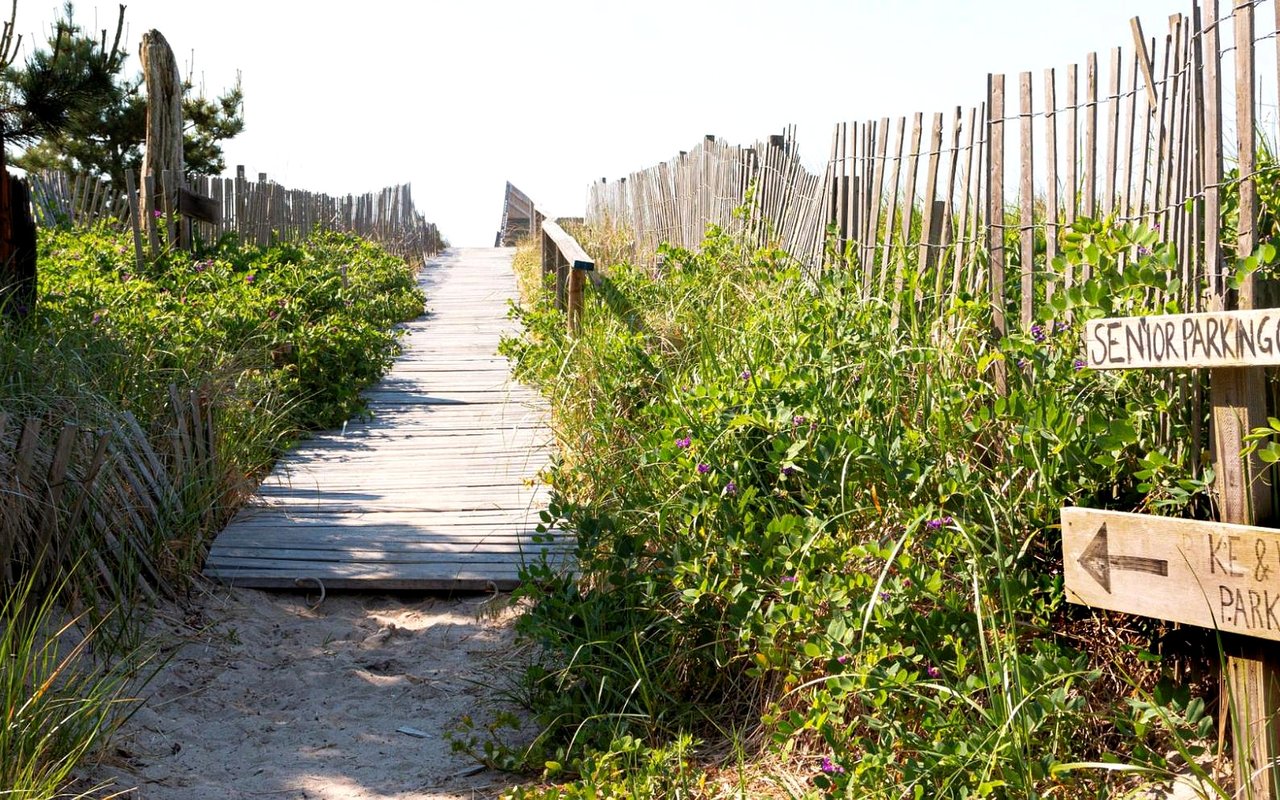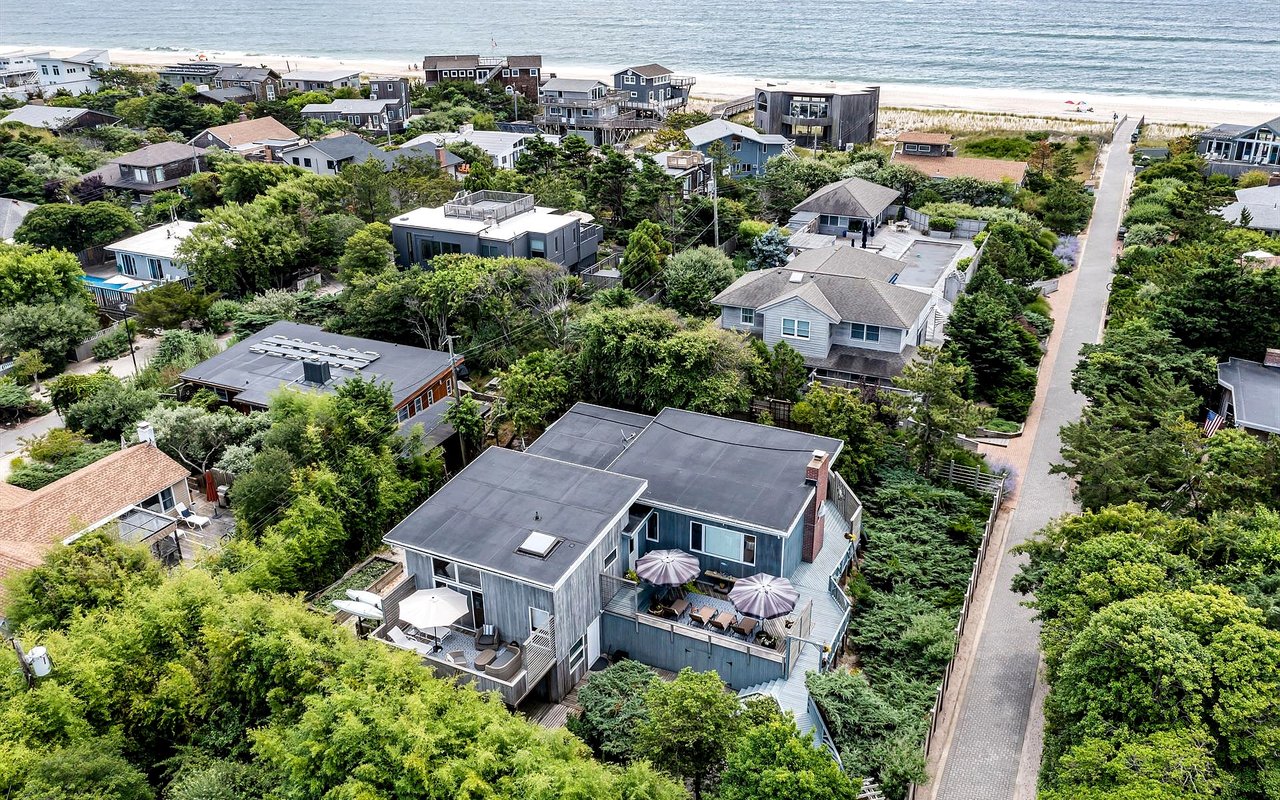
Every beach town has a version of the same September story: the crowds thin, the ice cream stands shutter, and the boardwalk goes back to the people who actually live there. Long Beach tells a different story, and the city's own calendar proves it. The Boardwalk and Street Fair that ran in June comes back for a second weekend on September 12 and 13, days after Ocean Beach Park's lifeguard season officially ends. The Long Beach Race Series doesn't taper off either. It runs a race on Labor Day itself and another the following Sunday. None of this reads like a town winding down. It reads like a handoff, and if you live here, the handoff is the part worth paying attention to.
The September Calendar, Compressed
The city's own event and beach pages lay out a tighter sequence than most residents probably clock in real time.
| Date (2026) | What Happens |
|---|---|
| Monday, September 7 (Labor Day) | Ocean Beach Park's seven-day lifeguard season and beach pass requirement end |
| Monday, September 7 | A Long Beach Race Series event lands on Labor Day itself |
| Saturday & Sunday, September 12-13 | The Boardwalk and Street Fair returns for its second 2026 run |
| Sunday, September 13 | Another Race Series event follows the fair weekend |
| Saturday & Sunday, October 10-11 | Fall Festival, with a pumpkin patch, Ferris wheel, and noon costume parade to Kennedy Plaza |
Look at that sequence and the "summer's over" framing stops making sense. The lifeguard season ends on a Monday, the fair opens on a Saturday five days later, and a race lands on both bookends. Long Beach isn't switching from busy to quiet in the first two weeks of September. It's switching from one set of visitors to another, on a schedule the city built on purpose.
The Fair That Never Actually Left
Long Beach runs its Boardwalk and Street Fair twice, and the second date isn't an afterthought tacked onto the shoulder season. It's scheduled for the exact weekend after the beach loses its lifeguards, which means the fair is functionally doing the job the beach just stopped doing: giving people a reason to be on the boardwalk on a Saturday.
That matters if you've always assumed the fair was a summer-tourist event. It isn't built that way. A fair that returns the week after lifeguard season ends is a fair aimed at the people who are still around after the day-trippers leave, which is mostly residents and the runners already circled on the Race Series calendar for that same weekend.
The Rule That Never Takes a Season Off
Here's the detail that actually contradicts what most people assume about a shore town easing its rules once summer ends. Long Beach's own beach safety page states plainly that dogs are not permitted on the beach or boardwalk, full stop, with no seasonal carve-out. Compare that to nearby Rockaway Beach, which lifts its dog restriction the day after Labor Day and keeps it lifted until the following May, or Atlantic Beach, which opens its sand to dogs from October through March. Long Beach doesn't do that. The ban holds in February the same way it holds in July.
That's not a small municipal footnote. It tells you something about how this city actually thinks about its boardwalk. A town that treats its dog rule as a tourist-season control relaxes it the moment the tourists leave. A town that treats its boardwalk as year-round infrastructure, used by the same runners and dog owners and evening walkers in December as in July, keeps the rule constant because the boardwalk's job never changes. Long Beach falls firmly in the second category, and once you notice that, the rest of the fall calendar reads differently. The races, the second fair, the festival: none of it is a tourist season extended out of habit. It's a resident's calendar that happens to also work for visitors.
Seasonal Stands and Year-Round Spots
The city's official concessions list draws a clean line between the boardwalk's summer infrastructure and its year-round anchors. Driftwood sits at Grand Boulevard, Riptides at Edwards Boulevard, the Skudin/Hurley Surf Center concession at Riverside Boulevard, Surfside Subs and Shakes & Shuckers at Lincoln Boulevard, and the Snack Shack at Pacific Boulevard. These are built for beach traffic. When the lifeguards leave and the sand empties out on weekdays, these are the spots whose hours and crowds shrink the fastest.
Barrier Beets, which opened at 190 Boardwalk near Riverside in July 2025, was built differently from the start, and it's already proven the model works by making it through a full off-season. Co-owner Margot Palazzo told Greater Long Island the goal was simple: "I want the food to be fun and pretty and colorful." The spot runs seven days a week year-round, 9 a.m. to 7 p.m. on weekdays and 9 a.m. to 4 p.m. on weekends, which puts it in a different category entirely from the seasonal stands a few blocks away. It's not competing for the same July crowd. It's positioned for the runner doing a January loop of the boardwalk who wants a salad, not a funnel cake.
Off the boardwalk, the pattern holds. Locals who've spent winters in Long Beach point to spots like Lost & Found, Swingbellys, Pure Shore Kitchen, WildFeast, Das Biergarten, Shine's, and Knights' Pub as the places that actually define the city's food scene once the seasonal crowd clears out. These aren't backup options for the off-season. Several residents describe the calmer months as the better time to eat out here, not the lesser one, because the wait times drop and the kitchens aren't running at beach-day volume.
What a Post-Labor Day Week Actually Looks Like
If you live here and you're wondering what the next several weeks realistically hold, it breaks down roughly like this:
- Labor Day itself, September 7: your last day needing a beach pass, and also a Race Series event, so the boardwalk is busy in two directions at once before it quiets down that evening.
- The following week: beach access opens up without a pass, hours get less rigid, and the boardwalk starts filling with the after-work walking crowd instead of the midday beach crowd.
- September 12-13: the fair returns, likely drawing a mix of locals who skipped the June crowds and the families who came specifically because school is back in session and weekends are freer.
- September 13: another Race Series event, meaning two race mornings inside one week.
- The weeks after: this is when residents say restaurants like Lost & Found and Swingbellys, along with boardwalk spots like Barrier Beets, start feeling less like beach-day fuel stops and more like the actual neighborhood spots they were designed to be.
- October 10-11: the Fall Festival brings the pumpkin patch, Ferris wheel, and the noon costume parade from the Recreation Center to Kennedy Plaza, the next fixed date on a calendar that never really stopped.
The Ferris Wheel Isn't a Consolation Prize
It's worth sitting with what the Fall Festival actually includes, because it's not a scaled-down summer event dressed up for fall. The pumpkin patch, the Pumpkin Bounce House, a carousel, a hay wagon ride, swinging chairs, a children's craft tent, and a Ferris wheel that the city itself notes offers views of the beach and bay all show up on the same October weekend. That's a full event built for a city that expects people to still be here, still be outside, and still be looking for a reason to gather on a Saturday in mid-October.
None of this argues that Long Beach stays exactly as busy in November as it is in July. It doesn't, and nobody who lives here would claim otherwise. What the calendar actually shows is that the transition isn't a cliff. It's a series of scheduled handoffs, each one landing within days of the last, each one aimed less at the beach-day visitor and more at the person who's going to be walking that boardwalk in February, dogless, the same way they were in July.
If you're already living that rhythm, none of this is news exactly. But it's worth having the actual dates in one place, especially the ones that reveal something about how the city built its calendar rather than just when things happen to fall.
For more on what makes life in Long Beach work the way it does, from the boardwalk's daily rhythm to the housing stock behind it, The Agency Long Island keeps a close eye on this market because it's one of the neighborhoods we work in every day. If you're curious what any of this means for your own address here, reach out and we're glad to talk through it.
This article is general information, not legal, tax or financial advice. Consult a qualified professional about your situation.