In April, The James went dark. No public notice, no explanation, just a sudden, weeks-long closure that left locals wondering what happened and, by one local blog's account, sent Babylon's rumor mill into overdrive. For a modern American brasserie occupying one of the most talked-about buildings in the village, that kind of silence doesn't last long before everyone has a theory.
The explanation, once it came, was almost anticlimactic: a paperwork issue with the New York State Liquor Authority had forced a temporary shutdown. The restaurant reopened on Monday, May 4, after a few weeks dark. But the panic in between is worth sitting with, because it says something true about how this village actually works. Babylon Village hasn't been adding restaurant space. It has been getting faster at moving the same restaurant space from one operator to the next, and when a link in that chain goes quiet, even briefly, residents notice immediately. There's no slack in the system to absorb it.
The buildings are doing the same job they've always done
Look at the four biggest restaurant stories in the village over the past two years and a pattern shows up that's easy to miss if you only track each opening on its own.
| Space | Former tenant | New occupant | Opened |
|---|---|---|---|
| 21 Fire Island Ave. | Babylon Carriage House (closed 2023) | The James | 2024, reopened May 4, 2026 |
| 100 Deer Park Ave. | Horace & Sylvia's (closed 2024, after two decades) | Babylon Social | Spring 2025 |
| 376 Deer Park Ave. | Molto Pizza (closed Oct. 2024) | Talina Osteria Romagnola | Sept. 17, 2025 |
| 96 E. Main St. | Pekin Long Island (closed suddenly, Sept. 2024) | Courtside Sport + Social | January 2026 |
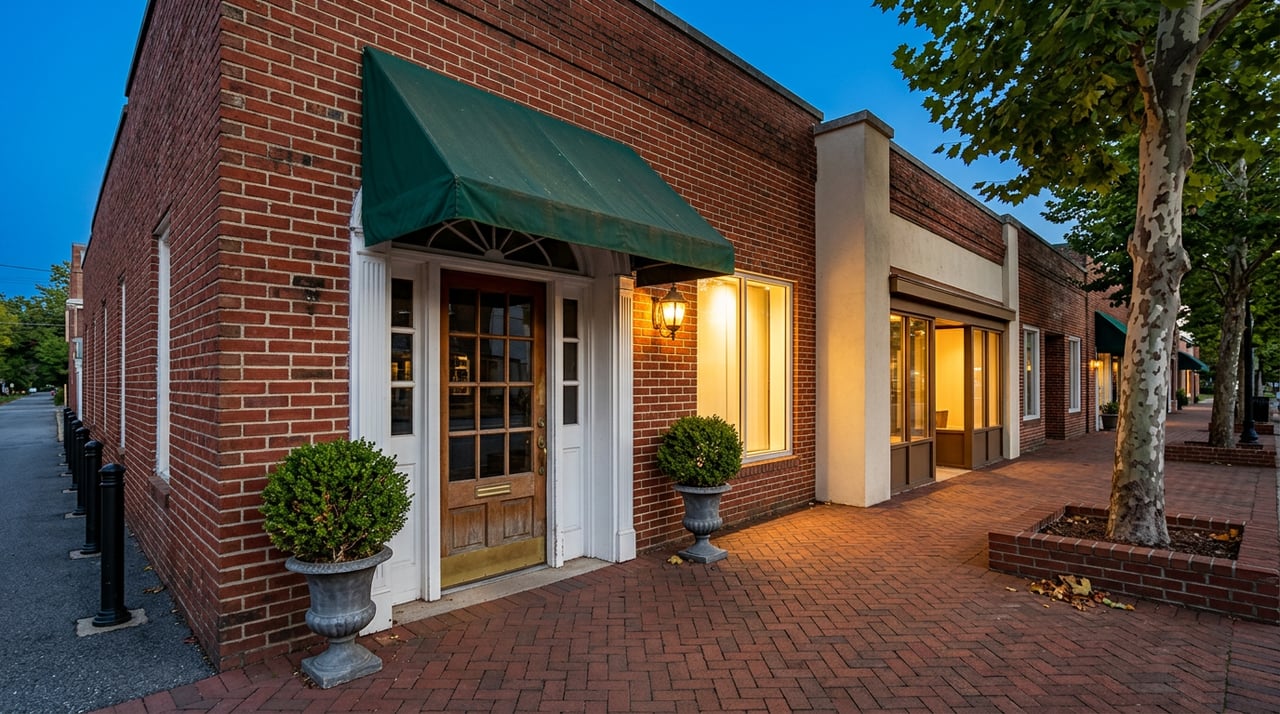
Every one of those addresses was already built, zoned, and permitted for food service before the new operator ever signed a lease. Nobody carved a new restaurant out of a former bank branch or a vacant retail unit. The village's restaurant inventory is essentially fixed by its 19th and early 20th century building stock, and what residents are experiencing as a wave of new dining options is really a fast-moving game of musical chairs among a small number of storefronts that have hosted a restaurant, in one form or another, for years.
That matters for how you read the pace of change here. It's not that Babylon Village suddenly became a more attractive place to open a restaurant. It's that turnover on Deer Park Avenue and Main Street has sped up, and the building stock hasn't grown to match it.
What a closure looks like when there's no spare capacity
The James is the clearest illustration of what that means in practice. Andrew Affa and Steve Squitiro, who also own The Piermont in Babylon and Arlo Kitchen & Bar in Northport, renovated the old Carriage House from the roof down before opening in 2024. Squitiro has said the building sold itself: it's iconic, and it sits down the block from The Piermont. When the restaurant went quiet this spring, there was no obvious next tenant waiting in the wings and no sense that the space would simply pass to someone else within weeks, the way Molto Pizza's old storefront passed to Talina. The James was too new, too specific to its owners, for the village to shrug off a closure the way it might shrug off a diner changing hands.
When the team announced its return, the message leaned on exactly that anxiety:
"While it was a challenging time for our team, the support, patience, and encouragement we received from our community and guests meant more than we can properly express."
That's not boilerplate. It's an acknowledgment that a few weeks of a dark storefront on Fire Island Avenue registered as a real disruption to people who eat there regularly, not just a line item in a local business newsletter.
New uses take roughly twice as long as new operators
If restaurant-to-restaurant swaps move fast, adding a genuinely new commercial use to the village moves slower, and the gap is bigger than you'd guess.
Talina's build-out ran from roughly January to September 2025, about eight months from the start of construction to opening night. Babylon Social moved even quicker: the new owners got the keys to 100 Deer Park Avenue on December 19, 2024, and had the space open by spring 2025, call it five months. Both were straightforward conversions. A restaurant left, a restaurant moved in, the plumbing and hood systems mostly stayed put.
Courtside Sport + Social took a different route. Because the concept included a 2,600-square-foot pickleball court behind the building, not just a new menu, it needed a special use permit from the Village Board, not a routine business license. The board approved that application in March 2025, with covenants requiring landscaping around the court to buffer noise for neighbors on Prospect Street and a music policy limiting anything audible outside the building. Construction started that spring with hopes of opening "later that summer." It didn't actually open until January 2026, nearly ten months after approval, close to double the timeline of a straight restaurant handoff.
The lesson for anyone trying to read the pace of change on Main Street: a new operator taking over an existing kitchen moves in five to eight months. A genuinely new use, one that requires the Village Board to weigh in on noise, parking, or hours, takes closer to ten. Whiskey Down Diner announced its move into 175 East Main Street, the former Ristorante Gemelli space, on New Year's Eve, with ownership targeting a fall opening. As of the most recent local reporting this winter, the project still needed to clear Babylon Village's approval process, and no opening has been reported in the seven months since. Whether it lands closer to the Courtside timeline or the faster Talina one may come down to whether adding alcohol service, something that space's previous occupant didn't offer, draws the same level of Village Board scrutiny that the pickleball court did.
What's actually still ahead this year
For residents keeping a mental list of what's open, what's coming, and what to expect before the leaves turn, here's where things stand as of early August:
- Open now: The James (reopened May 4), Talina Osteria Romagnola, Babylon Social, Courtside Sport + Social, and Roast Sandwich House, which recently opened its sixth Long Island location in the village.
- Announced, not yet open: Whiskey Down Diner at 175 East Main Street, still moving through village approvals, targeting a fall opening.
- Unchanged and still anchoring the calendar: the Babylon Village Farmer's Market at the Village Gazebo, 244 West Main Street, every Sunday from 8 a.m. to noon through November, and the Babylon Block Party, presented by the Babylon Village Chamber of Commerce and South Shore University Hospital on three Thursday evenings this year, June 4, July 16, and August 20, each one closing Deer Park Avenue from Main Street to Park Avenue and drawing a crowd typically between 2,000 and 3,000 people.
Two of those three Block Party nights are already behind us. The last one of the season lands August 20, which means anyone who's been meaning to catch Lily Flanagan's Pub's outdoor stage or just wants to see Deer Park Avenue at its most crowded still has one more shot before the series wraps for the year.
That last category is worth noting on its own. The farmer's market and the block party don't depend on a lease or a Village Board hearing. They're the parts of the summer calendar that don't move when a storefront changes hands, which is probably why they feel like the most stable fixture of the season even as the restaurant roster around them keeps turning over.
The takeaway for anyone paying attention to this stretch of Main Street
None of this means Babylon Village's dining scene is unstable. If anything, the speed with which spaces get re-leased, from Pekin Long Island to Courtside in about sixteen months, from Molto Pizza to Talina in about eleven, suggests real demand for a limited number of addresses. But it does mean that watching one restaurant's fortunes, especially one as visible as The James, tells you more about the village's appetite for turnover than it does about any single owner's staying power. The building stock is the constant. The names on the door are what keep moving.
For residents, that's mostly good news: a downtown this compact rarely stays quiet for long, and the businesses filling in behind each closure have tended to raise the bar rather than settle for less. For anyone weighing whether that kind of Main Street energy holds up as a reason to put down roots here, or to finally make a move within the village, the team at The Agency Long Island works this market closely enough to talk through what a stretch like Deer Park Avenue actually means for property values, not just foot traffic. Reach out any time you want that conversation.