Ask an agent who has closed a deal on the North Fork what surprises buyers most at the settlement table, and most will point to the same line item. It shows up after the mortgage payoff, after title insurance, sitting there as a percentage of the purchase price that nobody mentioned during the walkthrough. Buyers usually know it exists. What they get wrong is the number.
For years, the going assumption on the East End was a flat 2 percent transfer tax. That number is out of date. In Southold Town, which runs from Laurel through Orient, the combined rate is now 2.5 percent, and it has been since 2022, when voters added a half-percent surcharge for community housing on top of the original Peconic Bay Community Preservation Fund tax. The program itself was extended to 2050. If you are budgeting an Orient purchase off a number you heard from a friend who closed five years ago, you are budgeting wrong.
Who Actually Pays, and When
The Community Preservation Fund tax is paid by the buyer, formally called the grantee, not the seller. It gets collected at the Suffolk County Clerk's office in Riverhead the moment the deed is recorded, which means it lands on the closing statement as cash due, not something financed into the mortgage. Southold Town's own FAQ page spells out the mechanics: the tax applies to the amount above a set exemption threshold, and in Southold that threshold is $200,000 for improved property and $75,000 for unimproved land, figures that took effect in April 2023.
That exemption matters more in Orient than almost anywhere else on the North Fork, because Orient's prices are high enough that the exemption barely dents the bill.
What the Math Actually Looks Like on an Orient Closing
Orient's median list price in June 2026 sat at $2.19 million, with homes spending a median of 81 days on the market. Recent closed sales in the hamlet over the past year have ranged from the mid $800,000s to just above $3.1 million. Run those numbers through Southold's formula and the CPF tax stops being an abstraction.
| Purchase Price | Taxable Amount After $200,000 Exemption | CPF Tax at 2.5% |
|---|---|---|
| $850,000 | $650,000 | $16,250 |
| $1,800,000 | $1,600,000 | $40,000 |
| $2,190,000 (June 2026 median) | $1,990,000 | $49,750 |
| $2,350,000 | $2,150,000 | $53,750 |
| $3,150,000 | $2,950,000 | $73,750 |
A buyer closing on a median-priced Orient home this year is writing a check for nearly $50,000 that has nothing to do with the mortgage, the down payment, or title work. That is real money to have ready in liquid funds at closing, and it is the kind of number a buyer wants to know before they are sitting across from a title agent, not during.
Where That Money Actually Goes
The reason this tax exists, and the reason it keeps climbing rather than sunsetting, is that it works exactly as designed. Southold Town collected $11.1 million in CPF revenue in 2024 and used it to preserve 76 acres. In April 2026, the town board approved $6.1 million to protect nearly 50 acres in two separate deals, the larger being a 30-acre development rights purchase on Pellegrini Vineyards land in Cutchogue, priced at roughly $84,500 per buildable acre. Land preservation coordinator Lillian McCullough called it the final piece in a decades-long effort to connect a block of preserved farmland between two rural roads. Since 1983, the town has protected more than 10,140 acres through this program and its partners.
This is not background trivia. It is the mechanism. Every CPF dollar a buyer pays at closing becomes the town's purchasing power to buy development rights off the next parcel that might otherwise become a subdivision.
The Deal Happening in Orient Right Now
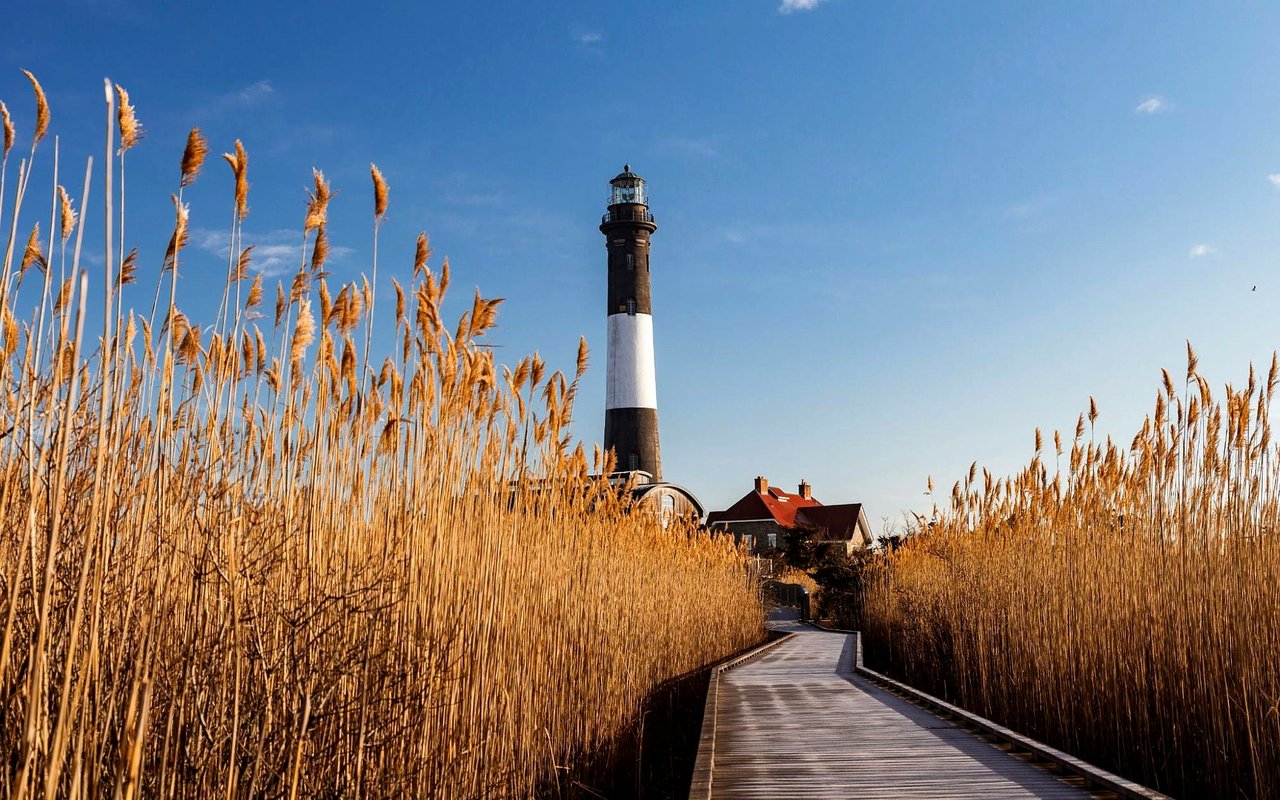
The clearest example sits inside Orient's own borders. A conservation subdivision proposed by the Tuthill family would preserve 94 acres out of a 112-acre parcel, producing just 17 housing lots under what the town calls an 80/60 structure, the type that preserves the largest share of land relative to the number of new lots allowed. Town Supervisor Al Krupski, who has spent decades in local government, has described the town's rural character as something built by design rather than by accident, pointing back to development pressure in the 1980s that doubled land and house prices in three years before the farmland program began pushing back.
That history explains the scarcity a buyer feels today. Orient is not short on inventory because nobody wants to sell. It is short on inventory because the town has spent forty years and hundreds of millions of CPF dollars making sure large parcels stay whole instead of splitting into a dozen new listings. The tax a buyer pays at closing is the same tool that kept the parcel down the road from becoming seventeen new houses instead of one preserved farm.
Why Sellers Feel This Too
For a seller in Orient, the same math cuts the other direction. Southold's stated policy goal has long been to keep at least 80 percent of its farmland in agricultural use, and every acre that goes into that program is an acre that will never come back onto the market as a buildable lot. That keeps supply structurally tight, which is part of why days on market in Orient can stretch past 80 days without signaling a soft market. It signals a market where the right buyer for a specific property takes time to surface, because there simply are not many comparable listings competing for attention.
Contrast that with Riverhead, just a few miles west and outside this same constraint in the same way. Riverhead has room to grow, active downtown redevelopment, and a different kind of real estate bet built on infrastructure investment rather than scarcity. Orient's bet is the opposite. Buyers here are not paying for growth potential. They are paying, quite literally at closing, to keep growth from happening.
The Older Version of the Same Trade
Long before there was a Community Preservation Fund, there were families making this same trade privately. The Latham family, early Orient farmers, donated the land in 1938 that became the entrance to what is now Orient Beach State Park, a 363-acre stretch of maritime forest and bay frontage that remains one of the reasons people want to live in Orient in the first place. The CPF tax formalized and scaled a version of the same instinct: land that stays open is worth more to the community than the next subdivision would be. The difference is that buyers today fund it collectively, one closing at a time, instead of relying on individual families to hand over acreage out of civic generosity.
Frequently Asked Questions
Is there any way to reduce the CPF tax on an Orient purchase? Southold is among the East End towns that offer an exemption for first-time homebuyers, a benefit Riverhead does not extend to its buyers. Anyone purchasing in Orient for the first time should ask early in the transaction whether they qualify, since the exemption has to be applied for and documented before closing.
Does the CPF tax apply to vacant land differently than a house? Yes. Unimproved land carries a smaller exemption of $75,000 in Southold, compared to $200,000 for improved property, so a vacant lot purchase can generate a higher effective tax rate on the taxable portion even at a lower sale price.
Why did the rate go up in 2022 if it was already funding preservation? Voters approved the additional half-percent specifically to fund community housing, a separate goal from farmland preservation, which is why the current 2.5 percent in Southold is really two programs stacked into one collection point at closing.
If you are weighing an Orient purchase, the CPF tax is not a reason to walk away from the hamlet. It is the reason Orient still has working farms next to waterfront lots instead of new subdivisions filling every open field between here and the ferry. Knowing the real number before you're at the closing table, and understanding what it's actually buying, makes the decision a more informed one. The Agency Long Island works Orient and the rest of the North Fork regularly and can walk you through what a specific property's closing costs will actually look like before you're under contract. Contact us.