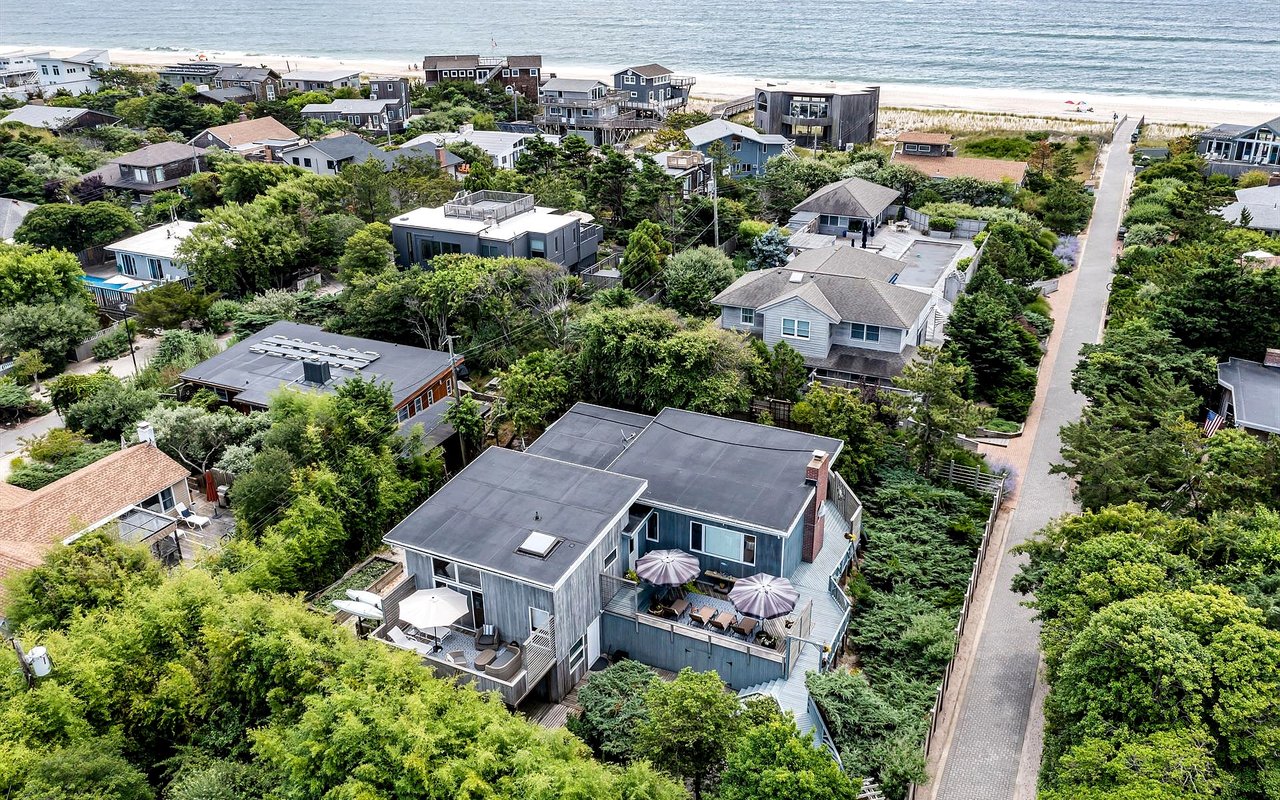
By The Agency Fire Island
Fire Island investment property attracts a specific kind of buyer — someone who sees value not just in the lifestyle but in the numbers. Owning a rental property on a barrier island 60 miles from New York City, with limited inventory and compressed seasonal demand, is a different proposition than investing in a standard residential market. If you are weighing whether this market makes sense for you, here is what the investment picture actually looks like.
Key Takeaways
-
Fire Island's limited inventory and strong seasonal demand support consistent rental income potential
-
Carrying costs — flood insurance, ferry logistics, and barrier island maintenance — are meaningfully higher than on the mainland
-
Community selection affects both purchase price and rental income potential
-
Long-term appreciation has been strong, with median prices up significantly in recent years
Why Fire Island Attracts Real Estate Investors
The investment case for Fire Island starts with supply and demand. Development on the island is tightly restricted — it sits within the Fire Island National Seashore, which means new construction is rare and total housing stock is capped. When demand rises, as it has steadily since 2020, prices and rents move upward because there is no new supply to absorb that demand.
Proximity to New York City reinforces this dynamic. A market that can draw renters from one of the densest population centers in the country, and deliver them to a car-free barrier island in roughly two hours, commands a premium that does not exist in more remote vacation markets.
Proximity to New York City reinforces this dynamic. A market that can draw renters from one of the densest population centers in the country, and deliver them to a car-free barrier island in roughly two hours, commands a premium that does not exist in more remote vacation markets.
What makes Fire Island a compelling investment market:
-
Median home values reached approximately $1.5 million across the island as of late 2025, with top communities like Fire Island Pines averaging near $2.1 million
-
Supply is structurally constrained by National Seashore designation — no new subdivisions, minimal new construction
-
Strong NYC feeder market with demand from buyers and renters across all five boroughs and surrounding suburbs
Understanding Rental Income Potential
Rental income potential on Fire Island varies widely by community, property type, and amenity profile. Oceanfront homes and properties with pools are the strongest performers. Demand for these homes during peak season is so concentrated that weekly rates of $10,000 to $20,000 are not uncommon — and they tend to book months in advance.
More modest properties can still generate meaningful income. Entry-level cottages in communities like Ocean Beach and Fair Harbor regularly rent for $4,000 or more per week during July and August. Even a partial summer of bookings can produce a return that meaningfully offsets carrying costs for the year.
More modest properties can still generate meaningful income. Entry-level cottages in communities like Ocean Beach and Fair Harbor regularly rent for $4,000 or more per week during July and August. Even a partial summer of bookings can produce a return that meaningfully offsets carrying costs for the year.
Key factors that affect rental income on a Fire Island investment property:
-
Oceanfront or bay-facing location commands the highest premiums
-
Pool access is a top amenity that expands the renter pool and supports premium weekly rates
-
Community character matters — Pines and Cherry Grove attract a different renter profile than Saltaire or Fair Harbor
-
Proximity to ferry docks and community centers supports higher occupancy across all price points
What to Know About Carrying Costs
Investing in Fire Island real estate means accounting for carrying costs that do not apply to most mainland investment properties. These costs are real and need to be modeled carefully before you make an offer.
Flood insurance is required for properties in designated FEMA flood zones, and many Fire Island properties fall into this category. Annual premiums can add thousands of dollars to your cost basis. Homeowners insurance on a barrier island also carries its own premium structure, separate from and in addition to flood coverage.
Maintenance and repairs cost more here than almost anywhere else. Every contractor, every appliance delivery, every renovation material has to get across the Great South Bay by ferry. Labor and logistics costs reflect that reality.
Flood insurance is required for properties in designated FEMA flood zones, and many Fire Island properties fall into this category. Annual premiums can add thousands of dollars to your cost basis. Homeowners insurance on a barrier island also carries its own premium structure, separate from and in addition to flood coverage.
Maintenance and repairs cost more here than almost anywhere else. Every contractor, every appliance delivery, every renovation material has to get across the Great South Bay by ferry. Labor and logistics costs reflect that reality.
Carrying costs to model before you buy:
-
Flood insurance — required for properties in FEMA flood zones; get an elevation certificate early to understand your exposure
-
Homeowners insurance for barrier island properties is priced higher than mainland equivalents
-
Maintenance and repair costs include ferry freight charges and limited contractor availability on the island
-
Ferry costs are a recurring ownership expense — factor them in as a fixed annual line item, not a variable
Evaluating Investment Returns
Fire Island investment properties are typically evaluated on their rental income relative to purchase price and carrying costs. At price points ranging from roughly $900K for modest properties to $2M-plus in premier communities, buyers need to run the numbers carefully.
The seasonal nature of the market means rental income is concentrated in a roughly 15-week core season between Memorial Day and Labor Day, with some additional activity in shoulder months. A well-located, well-marketed property can generate enough summer income to cover a significant portion of annual carrying costs — but buyers who expect year-round cash flow similar to a primary rental market will need to adjust their expectations.
The seasonal nature of the market means rental income is concentrated in a roughly 15-week core season between Memorial Day and Labor Day, with some additional activity in shoulder months. A well-located, well-marketed property can generate enough summer income to cover a significant portion of annual carrying costs — but buyers who expect year-round cash flow similar to a primary rental market will need to adjust their expectations.
What to evaluate when modeling investment returns:
-
Estimate seasonal rental income conservatively — use comparable rentals in the same community, not best-case scenarios
-
Stack all carrying costs: mortgage, flood insurance, homeowners insurance, property taxes, maintenance, management fees, and ferry logistics
-
Factor in personal use if applicable — weeks you use the home reduce potential rental income
-
Consider long-term appreciation alongside current income; Fire Island values have trended meaningfully upward over the past several years
FAQs
Is Fire Island a good market for first-time real estate investors?
It can be, but the barrier island carrying costs and seasonal income concentration make it a more complex investment than a typical single-family rental. We recommend buyers have a clear financial model before purchasing and work with an agent who knows the rental dynamics of their target community.
How do I find comparable rental data for a Fire Island investment property?
Local rental agents who operate in your target community are the most reliable source. Comparable rental history on a specific property — if the seller will share it — is worth requesting. We can help you evaluate any property's rental potential as part of your due diligence.
Does community choice affect financing options for a Fire Island investment property?
It can. Some lenders apply stricter terms to barrier island or flood-zone properties regardless of community. Jumbo loan products are common at these price points, and lender familiarity with Fire Island specifically is worth seeking out. A lender who has financed properties on the island before will navigate appraisal and insurance requirements more efficiently.
Ready to Explore Fire Island Investment Property?
Investing in Fire Island real estate rewards buyers who do their homework. We, The Agency Fire Island, have deep knowledge of this market across every community and can help you find a property that fits your investment goals. Reach out to learn more.